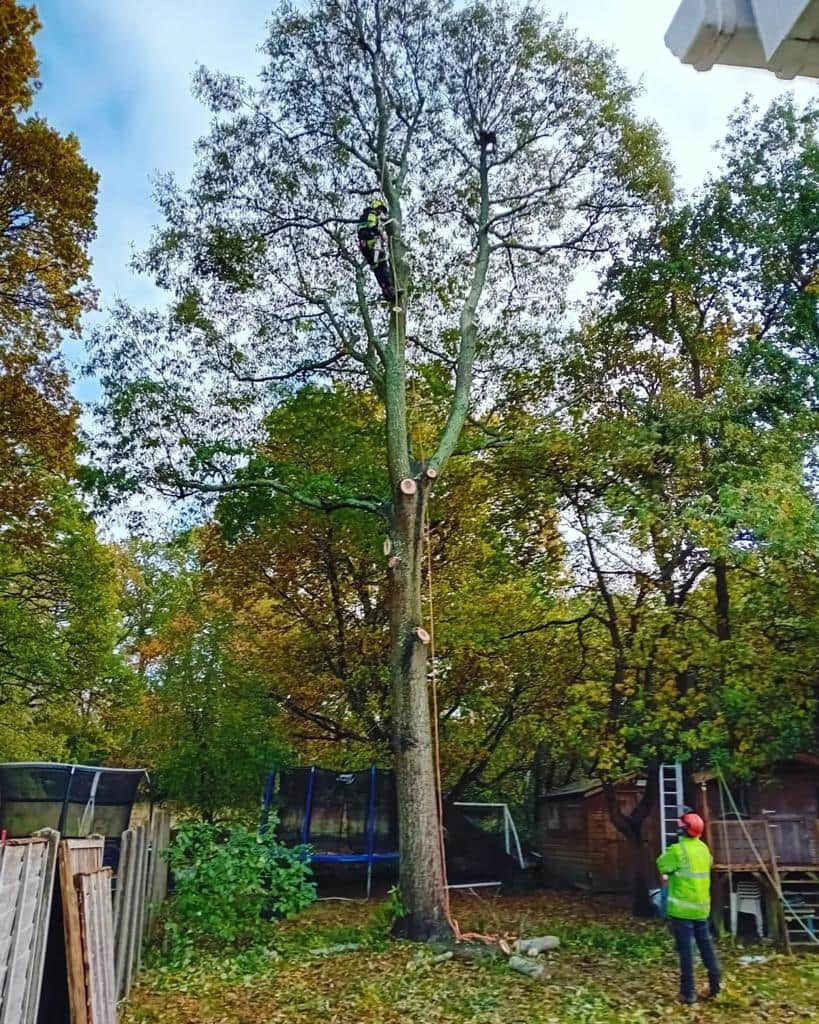
A mature tree can add character, structure and natural interest to a garden, but it can also occupy a considerable amount of usable space. A broad canopy may extend across lawns and seating areas, low branches can restrict movement, and a tree positioned in an inconvenient location can influence how much of the garden can realistically be used.
If creating more garden space is the main objective, complete tree removal is not automatically the best solution. Depending on the tree’s position, condition, species and growth pattern, professional pruning may be able to create a more open and practical garden while retaining the tree.
For homeowners in Dursley, Gloucestershire, choosing the right tree surgery method begins by identifying exactly what is limiting the space. The best approach for low branches obstructing a lawn may be very different from the solution required when an entire mature tree occupies an area needed for a new garden layout.
Which Tree Surgery Method Can Create More Usable Garden Space?
The most suitable tree surgery option depends on what you mean by wanting “more space”. Some homeowners want greater physical access beneath a tree, while others want to reduce the spread of a large crown or completely reclaim the ground occupied by the tree.
Possible approaches include:
- Crown reduction to decrease the overall spread of the canopy
- Selective pruning to shorten particular intrusive branches
- Crown lifting to increase clearance beneath lower branches
- Crown thinning where an overly dense canopy is part of the concern
- Tree removal where retaining the tree prevents the garden from being used as intended
- Stump grinding following removal where the remaining stump occupies useful ground
A professional assessment can determine which approach is appropriate without removing more of the tree than necessary.
Crown Reduction Can Make a Large Tree Feel Less Dominant
Where the main issue is an oversized canopy, crown reduction may provide an effective solution.
Crown reduction involves carefully reducing the height or spread of the tree while maintaining a balanced framework. Rather than indiscriminately cutting branches back, appropriate pruning points are selected according to the tree’s structure and the desired outcome.
Reducing the spread of a large canopy can reclaim visual and practical space around lawns, patios, pathways and other garden features.
The amount of reduction needs to be appropriate for the particular tree. Excessive pruning can produce poor results, so the work should be guided by the tree’s species, condition and natural growth characteristics.
Crown Lifting Can Create More Space Beneath the Tree
Sometimes the tree itself is not occupying too much ground; the real problem is that low branches make the area underneath difficult to use.
Crown lifting involves removing or shortening selected lower branches to increase clearance beneath the canopy.
Where suitable, this can make it easier to walk beneath the tree, maintain surrounding areas and use more of the garden without substantially reducing the upper crown.
It can be particularly useful when healthy mature trees provide valuable character but their lower branches have gradually extended into spaces used by the household.
Selective Pruning Can Target the Branches Causing the Problem
Not every tree needs work across its complete crown.
A small number of long branches may be responsible for most of the inconvenience. They might extend across a seating area, restrict a pathway or occupy part of the garden that homeowners would otherwise use.
Selective pruning allows attention to remain focused on these specific branches.
This can be a proportionate solution when the remainder of the crown is appropriately sized and positioned. The objective is to address the actual source of the problem rather than carrying out unnecessary work elsewhere on the tree.
Crown Thinning Can Make a Garden Feel More Open
A dense tree canopy can make a garden feel enclosed even when the physical footprint of the tree is not particularly restrictive.
Crown thinning involves selectively removing appropriate branches throughout the canopy while generally retaining its overall dimensions.
This can create a less dense crown and allow more light to filter through the tree.
It is important to understand that thinning does not substantially reduce the overall size of the tree. If branches physically occupy too much garden space, reduction or selective pruning may be more relevant.
More Light Can Make the Existing Garden Space More Usable
Wanting more garden space does not always mean needing additional square metres of open ground.
A heavily shaded lawn or seating area can feel significantly less usable because a dense or expansive canopy prevents sufficient light from reaching it. Appropriate tree surgery can sometimes make these areas feel much more open without removing the tree completely.
The correct pruning method depends on why the shade is occurring.
Simply cutting large quantities of growth from the crown is not necessarily the answer. A measured approach should consider how the tree is structured and which work can realistically improve conditions below.
When Is Tree Removal the Better Option?
There are circumstances where pruning cannot create the amount of space required.
A large tree may occupy the exact area needed for a substantial change to the garden, or its trunk and root position may mean that reducing the crown would make little difference to the usable ground.
Removal can also become more relevant when the tree is in poor condition or is fundamentally unsuitable for its position.
The decision should be based on the complete situation rather than simply removing a healthy tree because it is large.
Where suitable pruning can achieve the homeowner’s objective, retaining the tree may remain entirely practical. Where it cannot, removal may provide the clearer long-term solution.
Consider How Much Space the Trunk Actually Occupies
It is useful to distinguish between space occupied by the canopy and space occupied by the physical position of the tree.
Crown reduction can decrease branch spread, but it does not change where the trunk stands.
If the trunk itself prevents the garden from being redesigned in the desired way, pruning may provide limited benefit.
This is particularly relevant when homeowners want to substantially reorganise an outdoor area. Understanding the intended finished layout before choosing tree surgery can prevent work being carried out that does not actually achieve the desired improvement.
Stump Grinding Can Help Reclaim Ground After Removal
Removing a tree does not necessarily make the complete area immediately usable if the stump remains.
A stump can occupy valuable ground and interfere with the appearance or practical layout of the garden. Where appropriate following tree removal, stump grinding can reduce the remaining stump and make it easier to incorporate the area into future landscaping.
This can be particularly valuable when the objective of tree removal is specifically to reclaim garden space.
Thinking about the stump at the planning stage ensures that the complete outcome is considered rather than focusing only on removing the visible tree.
Think About How the Garden Will Be Used Afterwards
Before deciding which tree surgery option is best, homeowners should consider what they want to do with the newly available space.
The objective might be to create a more open lawn, improve access, increase room around an existing patio or simply make the garden feel less crowded.
The intended use can influence how much tree work is actually necessary.
For example, crown lifting may provide sufficient clearance for easier movement beneath a tree, while a substantial change to the overall garden layout could require a different approach.
Defining the desired result makes it easier to choose proportionate tree surgery.
Avoid Removing More of the Crown Than Necessary
When space is the priority, aggressive pruning can seem like the quickest solution. However, removing excessive growth does not necessarily produce a better garden or a better-managed tree.
Professional tree surgery should aim to achieve the required improvement while retaining an appropriate crown structure.
This means selecting branches carefully and considering how the tree will respond after pruning.
A measured approach can often create the necessary clearance or reduced spread without leaving the tree unnecessarily depleted or poorly balanced.
Consider Future Regrowth Before Choosing an Option
Pruning changes a tree, but it does not stop it growing.
Where a tree is healthy and vigorous, new growth will continue after suitable crown work. The rate and nature of that growth vary between trees, which means future maintenance should form part of the decision.
If a tree requires substantial repeated pruning simply to remain compatible with the available space, its long-term suitability for that position may deserve consideration.
The best tree surgery decision should therefore address both the current garden and how the tree is likely to develop afterwards.
Why Professional Assessment Is Important
The amount of space that can realistically be gained through tree surgery is difficult to judge without considering the complete tree.
A professional tree surgeon can assess the crown structure, branch positions, condition and relationship between the tree and surrounding garden. This makes it possible to determine whether crown reduction, lifting, selective pruning or another approach is likely to achieve the homeowner’s objective.
Professional assessment can also prevent unnecessary tree removal.
If a relatively focused pruning operation can make the garden significantly more usable, removing a healthy established tree may not be necessary.
Tree Surgery for More Garden Space in Dursley, Gloucestershire
For homeowners in Dursley, Gloucestershire, creating a more spacious garden often begins with understanding how existing trees influence the available area.
At EM Tree Surgery Dursley, we can assess the position and condition of a tree alongside the way you want to use your garden. Where suitable, carefully planned crown reduction, crown lifting or selective pruning can help create additional clearance and make the surrounding space more practical.
Where retaining the tree would prevent the desired use of the garden, removal and appropriate stump management can also be considered. The aim is to recommend work that is proportionate to both the tree and the outcome you want to achieve.
Conclusion
The best tree surgery option for creating more garden space depends on what is currently restricting that space. Crown reduction can decrease the spread of an oversized canopy, crown lifting can create additional clearance beneath low branches, and selective pruning can address individual limbs that interfere with particular areas.
Complete tree removal may be appropriate when pruning cannot provide the space required, particularly where the tree’s physical position prevents the garden from being used as intended. However, removal should not automatically be the first choice when appropriate tree management could achieve the desired result.
If trees are limiting how you use your garden in Dursley, Gloucestershire, contact EM Tree Surgery Dursley. We can assess the existing trees and recommend a suitable approach for creating a more open, practical outdoor space without carrying out unnecessary work.
Call us on: 01453 708 172
Click here to find out more about EM Tree Surgery Dursley
Click here to complete our contact form and see how we can help with your tree needs.